Most of this work is plumbing. The decisions that mattered were about where automation stops and a person takes over.
AI drafts, a person approves
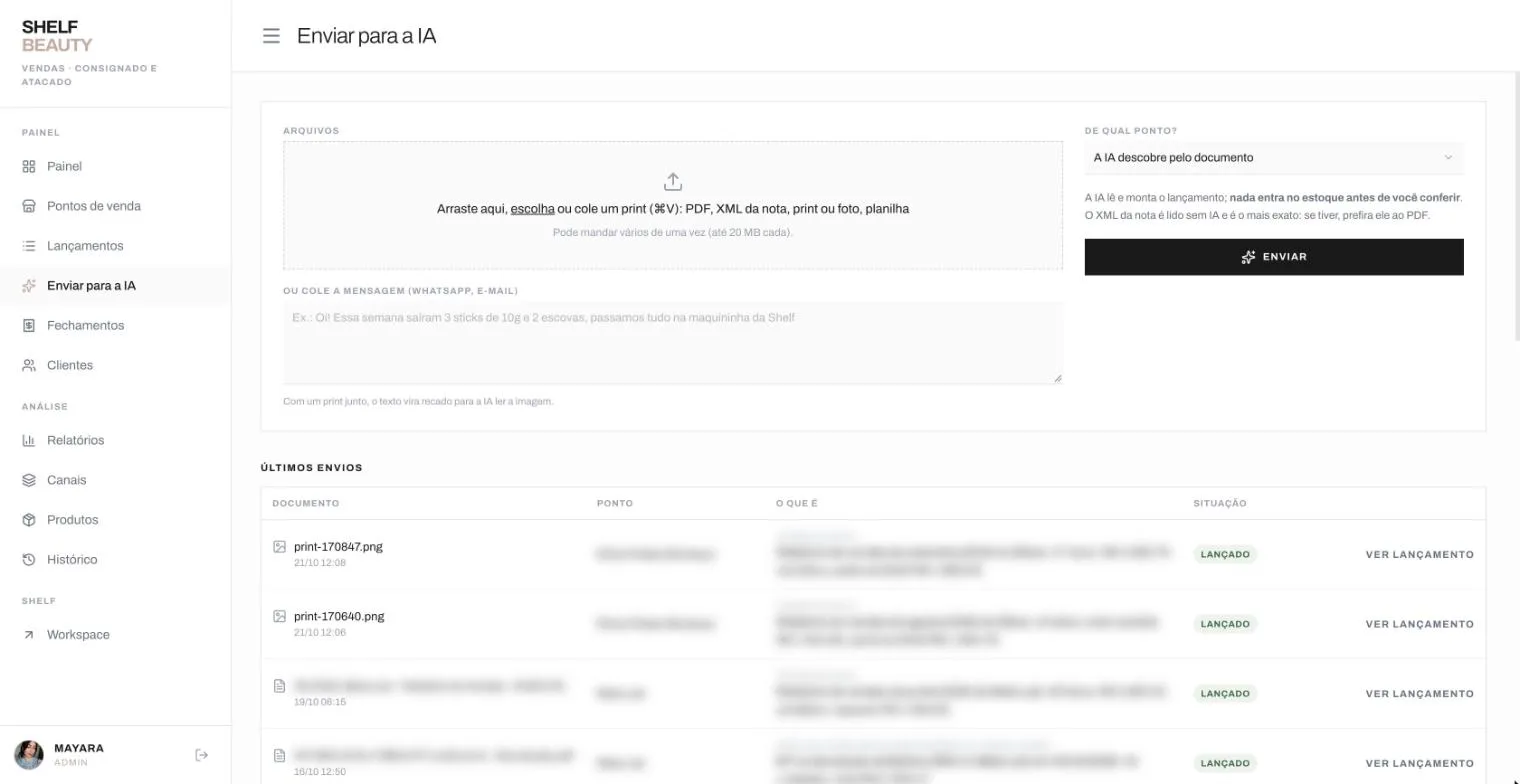
Studios send their sales however they have them: a PDF, an invoice, a photo, a WhatsApp message. AI reads the document and drafts the entry, and nothing goes into stock until someone checks it. When there is an invoice XML, it is read without AI at all, because a structured file is more exact than any model.
Instead of: letting the model write straight into stock, where one misread number becomes a wrong balance with a partner.
Measure the messages honestly
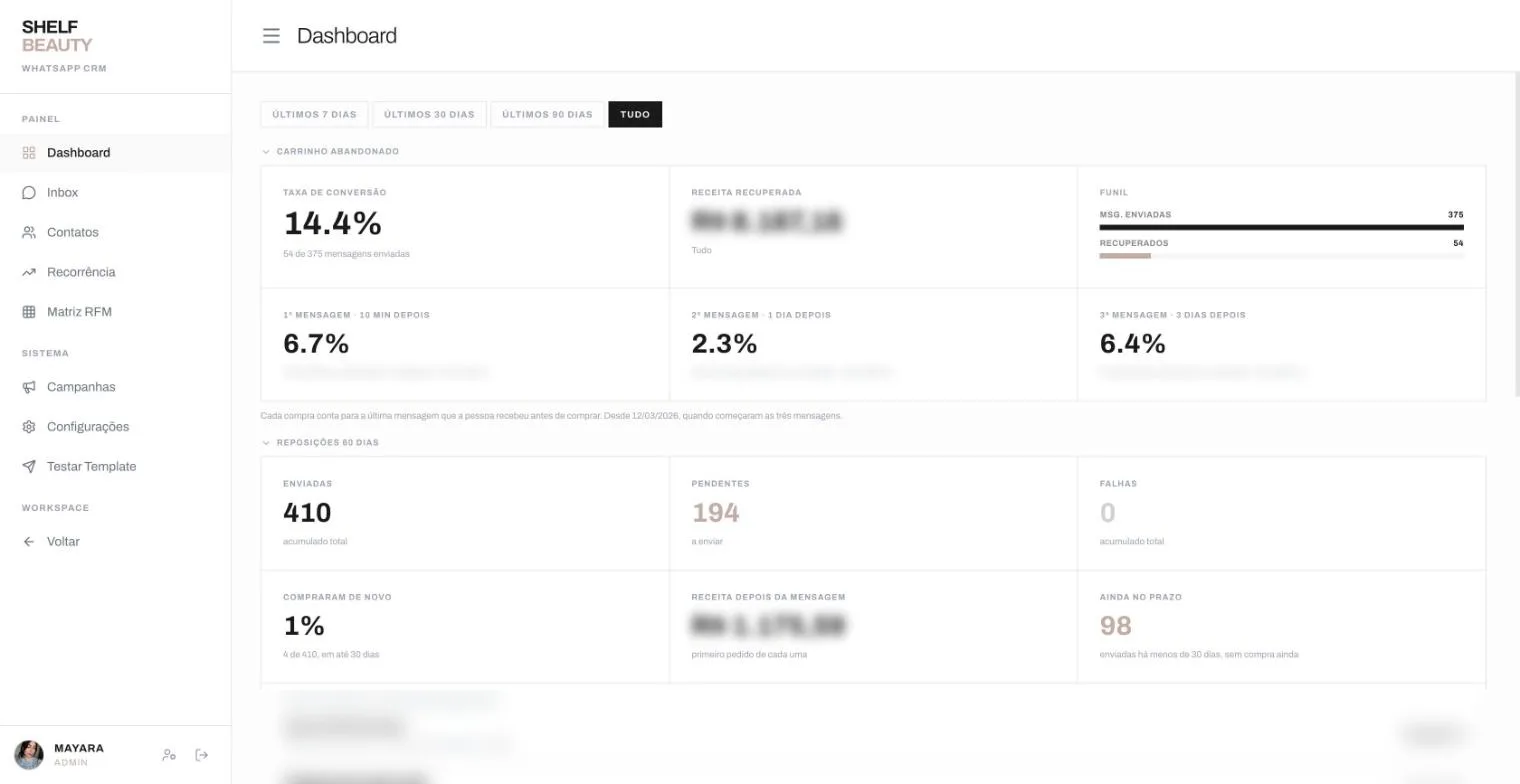
Each purchase is credited to the last message the person received before buying, so the three abandoned-cart messages are never counted twice. The repurchase report says on screen that it does not prove the reminder caused the sale, because people who would have bought anyway are in it too.
Instead of: counting every sale after any message as a win, which makes a dashboard look good and makes decisions worse.
The assistant steps back for people
Live since 30 September 2026, the virtual assistant answers WhatsApp by itself, 1 to 3 minutes after the customer's last message, so a person can step in first, and it stops the moment someone from the team replies. It looks up orders live in Shopify, turns voice messages into text, sends creator and partnership requests to the right email, and tags people who want to be affiliates for the waitlist. It ran on a test list of numbers before it answered everyone.
Instead of: switching a bot on for every customer at once and having it talk over the team.
Segments that fit the business today
The RFM matrix is recalculated every night, but its cut-offs are set for where Shelf is now: a growing store where most customers have bought once. The screen explains the scores in plain language and notes that the top tiers will fill in, and the cuts get finer, as repeat buyers grow.
Instead of: textbook segments that would put almost everyone in the same box and tell the team nothing.
Rules live in code, not in the prompt
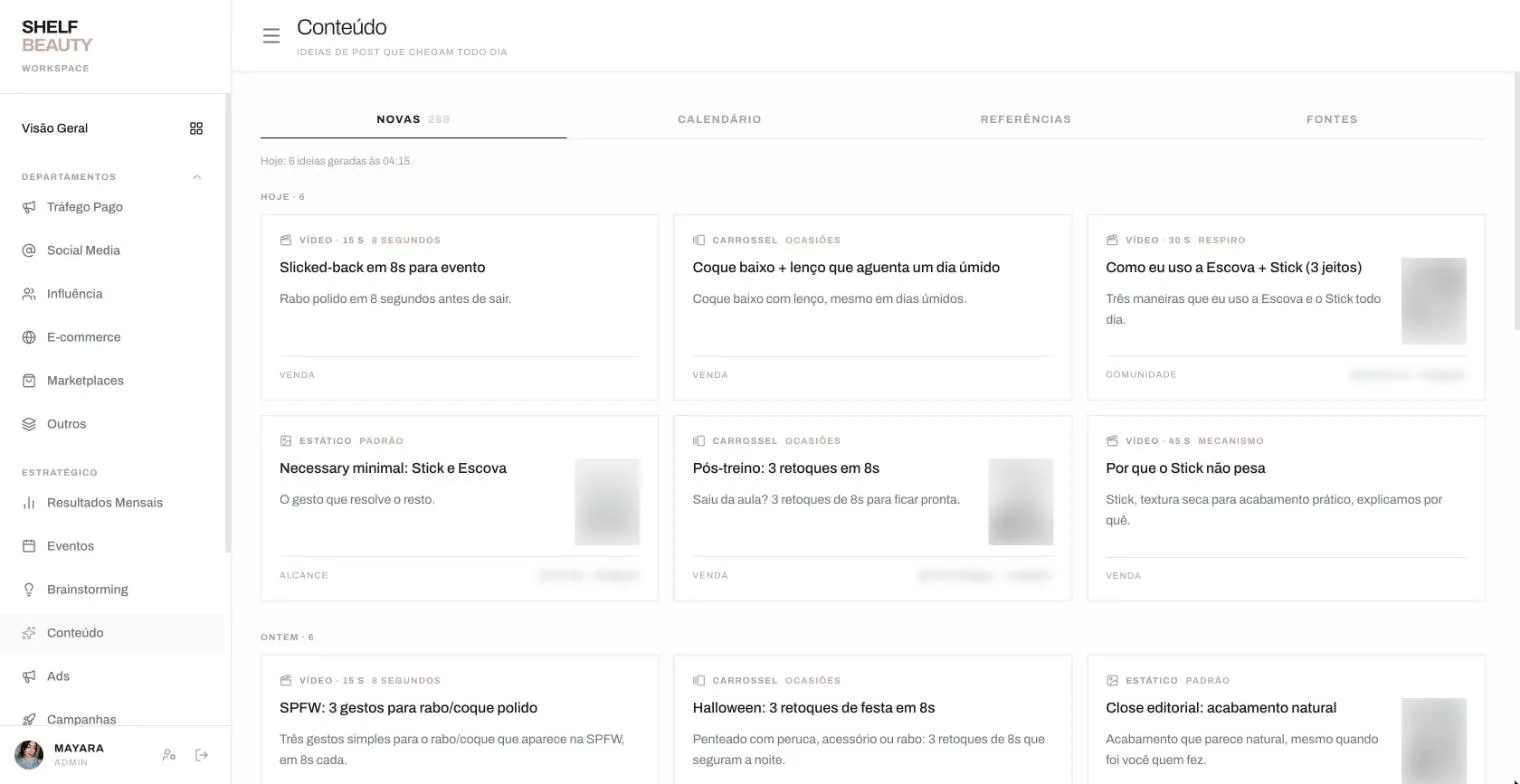
Some things cannot depend on a model following instructions. The assistant hands the chat to a person for complaints, photos and attachments, health questions, or anyone who asks for a human, and that rule is enforced in code. Order details only go out once the order number and the customer's name match. Every content idea passes a code filter too: banned words, em dashes, typical AI phrasing like "it's not X, it's Y", and topics on pause.
Instead of: writing the rules into the prompt and hoping the model keeps to them every time.
Ideas grounded in something real
Each morning idea is built on one real reference, and code checks that the reference exists. The ideas follow the brand manual and the live Shopify product list, and they learn from the team: the last 25 reasons for discarding an idea, the ideas recently approved, and three weeks of history so nothing repeats.
Instead of: a generic idea generator that suggests the same trend every brand is already posting.